

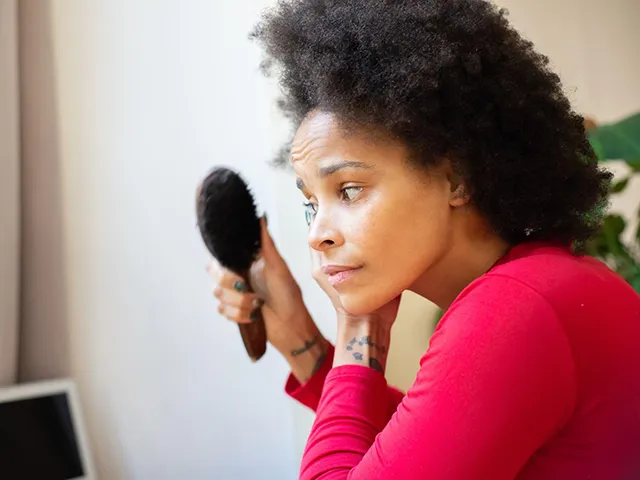

Hair loss in adults can stem from genetics, hormones, medical conditions or nutrition. Learn the common causes, when to seek advice and available treatments.
Many of the strands circling your shower drain this morning stopped growing about three months ago. You just couldn’t have known.
Losing 50 to 100 hairs a day is normal, but when that number climbs or the thinning sticks around, something’s usually behind it: genetics, hormones, a medical condition, or a nutritional gap.
Here’s the thing, though. Treatment only works when it matches the cause, and the options run from creams and tablets all the way to surgery.
How Common Is It?
Both males and females commonly experience hair loss. Males commonly lose hair in the frontal and vertex regions, whereas females usually experience general thinning throughout the scalp, leading to wider partings and thinner ponytails.
Genetic hair loss becomes more common with age, with roughly half of males showing signs of pattern loss by the age of 50. However, in some instances, hair loss is temporary. Illness, periods of extreme stress, or major life changes can cause a short-term increase in hair loss.
Individual differences in hair loss occur widely. Hair loss does not necessarily indicate something serious. Comparing the appearance of your hair to a friend’s gives little information.
Genetic and Hormonal Causes
Genetics: Depending on the genetic makeup from either parent, hair follicles may be susceptible to damage, leading to finer and shorter hair. The most well-known cause of genetic hair loss is androgenetic alopecia.
Hormonal changes can also cause hair loss. This can happen during pregnancy, menopause, or due to imbalanced thyroid levels.
Dihydrotestosterone (DHT), a derivative of testosterone, can contribute to miniaturisation in hair follicles in those with a genetic susceptibility. Miniaturisation causes weaker hairs to grow from the follicles. Knowing the type of hair loss allows you to know the appropriate treatment.
Medical and Nutritional Causes
Hyperthyroidism and hypothyroidism can both cause problems with hair growth. Low iron can cause excessive hair loss in some people.
Alopecia areata is an autoimmune disease, which can lead to patchy hair loss. Furthermore, infection/inflammation on the scalp can cause hair loss.
Nutrient deficiencies may also cause issues. Low levels of protein, iron, and certain vitamins can lead to problems with hair growth.
Avoid self-medicating with supplements. Instead, consult a doctor so that tests can be performed and the correct cause identified. Continuing to take supplements without knowing the cause of hair loss may be ineffective.
For example, if someone has hypothyroidism that is left untreated and they take supplements for their hair loss, progress in reducing hair loss may be hindered.
Shedding or Thinning?
These are often confused, but below is a summary of the differences.
Telogen effluvium refers to temporary hair loss. It is commonly caused by physical/emotional stress, illness, operation, or significant life change. However, hair loss will normally occur 2-3 months after the incident.
This can be confusing, as it occurs far after the incident. The cause may seem recent; however, the hair loss occurred several months ago.
For example, if someone had a high temperature in spring, by summer they may be experiencing large amounts of hair loss in the shower, but may have attributed it to a new shampoo.
Hereditary hair loss occurs gradually, commonly in the frontal hairline, temples, and vertex. It generally happens over many years. If caused by a triggering factor, hair loss may settle once that issue is resolved.
Progressing hair loss will require ongoing management. Chronic hair loss is defined as hair loss over 6 months. If hair loss persists, or is being noticed by others, a professional opinion should be sought.
Non-Surgical Treatments
There are several non-surgical options available. Effectiveness varies between individuals. Topical minoxidil can encourage hair growth in certain types of hair loss.
However, results often take 3-6 months to appear, and ceasing treatment often means hair loss resumes. Finasteride is a prescription drug that may be recommended for some males with pattern hair loss. However, it is not approved for females.
PRP (platelet-rich plasma) may be considered in certain circumstances. If deficiency is confirmed via tests and managed with medical support, this is a reasonable solution.
Eating a balanced diet, managing stress, and having a gentle routine for your scalp can also help. Speak to your doctor to see which option/s would be best for you.
Results will vary depending on the cause. Be sceptical about how long the results may take.
When to Seek Advice?
See a doctor if you are losing large amounts of hair suddenly, or developing bald patches quickly.
If you are experiencing unchanging thinning in the frontal/vertex region, pain, irritation, redness, or inflammation on your scalp, or if you are experiencing other unexplained symptoms alongside hair loss, you should seek advice. Similarly, if you are continuing to lose hair despite improving lifestyle factors.
A dermatologist or other medical professionals can assess your scalp and discuss your medical history. They can then recommend further tests/treatment.
This would be a much more productive way to spend your evening! The earlier treatment can begin, the more positive the outcome may be.
Hair Transplants
In cases of progressive/permanent hair loss, surgery may be considered. Healthy follicles can be taken from donor regions of the scalp (usually the back/sides) and grafted into areas of thinning. It doesn’t create new hair; it relocates what’s already yours.
There are a couple of different techniques. Follicular Unit Extraction (FUE) involves taking single follicular units. Follicular Unit Transplantation (FUT) involves taking a small strip of skin.
Those suitable for this procedure will depend on the amount of donor hair available, the type of hair loss being experienced, medical history, and realistic expectations.
Those in New York interested in professional treatment options for hair loss can find out more about hair restoration in NYC. Many people have ongoing medical treatment to maintain their remaining hair.
Winding Up
Hair loss in adults can be caused by genetic, hormonal, nutritional, or medical factors. It is important to identify the cause. If hair loss is ongoing, seek medical advice to determine the most suitable treatments for you. Don’t panic, but don’t ignore it. There is no need to guess!